- Home >
- Philip's Corner >
- Computing >
- IBM 1620
This IBM 1620 computer was acquired by the college from another training establishment in the 1970's. It was given for free, with the only catch being that you move it yourself !. But we had to have it because very importantly it came with a model 1311 disk drive, with a 2Mb storage capacity.


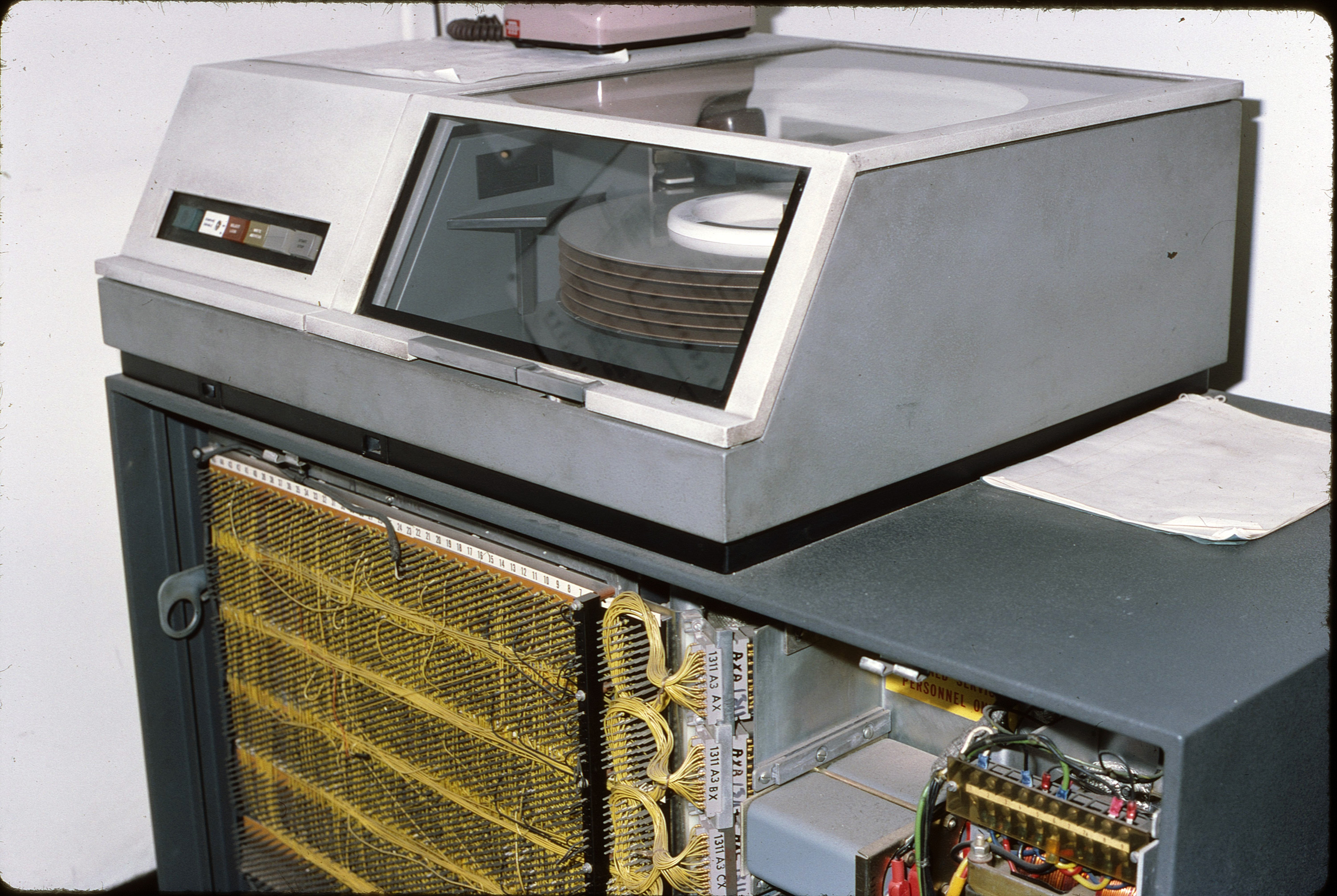
These old 'heavy iron' computers get that name for a very good reason. They are built within very strong, heavy steel frames, have massive heavy power supplies inside that frame, and represent quite a challenge to move.
Professional moving companies probably can deal with such things easily, but there was no budget for that, so a more enterprising solution was needed.
So after two days with spanners and screwdrivers, the two huge swing-out logic card frames were out, and all other heavy items such as power supplies removed, everything being carefully documented for reassembly. Even with this dissasembly, the near empty frame was incredibly heavy to lift.
On reaching its new home, it did go back together without problem, and still worked.
Although it was used occasionally for programming in Fortran, more importantly it played a large role in improving the usabilty of the Elliott 803 computer. Move about that in the 803 Mods section.
The 1620 continued to work well for several years, then one day its memory failed. After a lot of investigation it turned out that an inhibit wire inside the core memory stack had gone open circuit.
The core stack was quite easy to unplug and remove from the computer frame, and it was easy with a multimeter to confirm the broken inhibit wire and what plane it was on. After many wire links connecting the failed core plane with its neighbour were cut, it was then possible to separate the stack into two parts.
Close investigation with a magnifier showed a clean break in the inhibit wire right at the edge of the stack where the wire takes an acute turn in its snaking route through all the cores. Because of its location, it was relatively easy to solder the two wire ends back together. After reassembling the stack and reconnecting all the cut links, it went back into the computer and normal operation was resumed.
The core memory stack in the IBM 1620 has a thermostatically controlled heater attached to it to keep the core memory always at a constant temperature. Because the computer was turned on only when required, my guess is that the constant thermal cycling of the stack caused a fatigue failure of the wire.